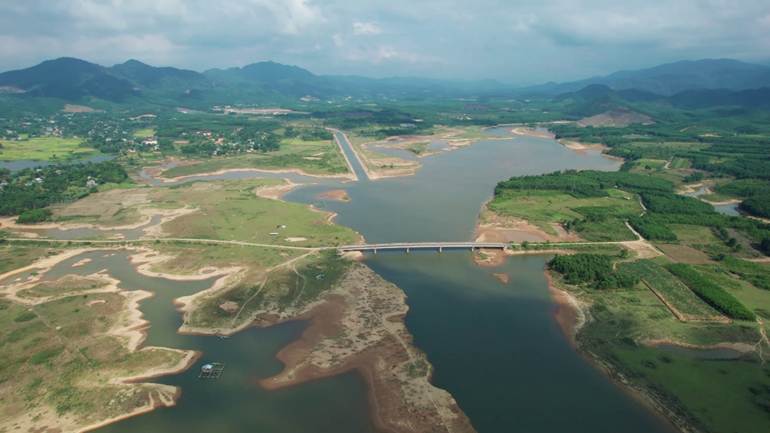
The A Sap River is one of the important river systems in western Huế City. Originating in the mountainous area of A Lưới, it forms part of a transboundary river system within the Sekong–Mekong River Basin. Beyond its importance to the lives and livelihoods of local communities, the A Sap River and its tributaries support significant aquatic biodiversity, particularly native fish species.
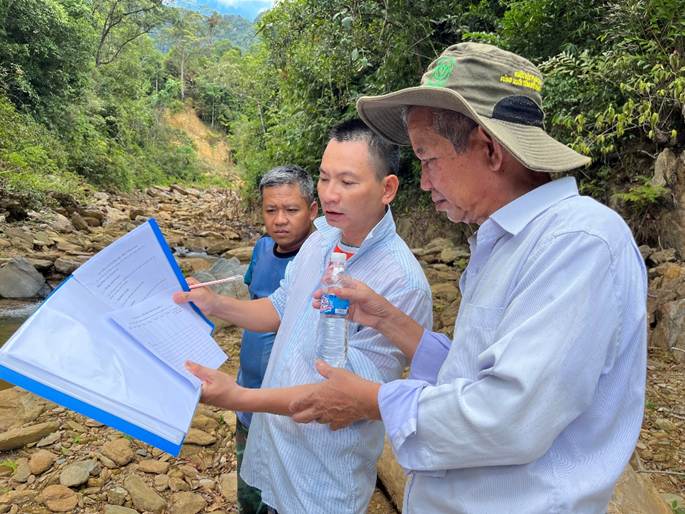
To contribute to the protection of fisheries resources and the conservation of important habitats within the A Sap River system, the Centre for Social Research and Development (CSRD), in collaboration with fisheries experts and researchers, conducted aquatic biodiversity research and field surveys of streams and tributaries across the basin. The research aimed to identify potential areas for further consideration as community-based fisheries resource protection areas in the A Sap River Basin.
The research was carried out under IP3, a project funded by the Australian Department of Foreign Affairs and Trade (DFAT) and the Swiss Agency for Development and Cooperation (SDC), and managed by Oxfam Novib. CSRD is responsible for implementing the project in Huế City.
The research builds on the findings of surveys conducted during the raining season (August – September) by CSRD under IP2 in 2024, and further expanded the research and field investigations during dry seasons (April – July) in 2026. The study focused on fish composition and distribution, habitat characteristics, water conditions, signs of spawning and nursery areas, pressures affecting fisheries resources, and the practical conditions of the surveyed areas.
Key Values of Aquatic Biodiversity in the A Sap River Basin
The research found that the A Sap River system continues to support a wide range of habitats that are important for freshwater fish. From upstream streams with rocky and gravel beds, rapids and fast-flowing sections, to deeper river stretches with sandy and muddy substrates and transition zones where tributaries meet the main river, different habitats can serve different functions throughout the life cycles of fish species.
Importantly, the research recorded 26 endemic, rare and/or conservation-priority fish species. This finding highlights that the A Sap River is important not only as a source of fisheries resources for local livelihoods, but also as an area of significant biodiversity conservation value.
Rather than focusing solely on protecting individual species at isolated locations, the research highlights the importance of protecting habitats and ecological connectivity across the wider aquatic system. This provides an important basis for considering fisheries resource protection areas that conserve ecologically valuable sites while maintaining connections between tributaries and the main A Sap River.
Habitats and Tributaries Play an Important Role in the Life Cycle of Fish
One of the notable findings of the research was the diversity of habitat conditions across the surveyed areas. Shallow sections with fast-flowing water and rocky or gravel beds can provide suitable conditions for stream-dwelling fish to live and feed, while deeper sections, sandy and muddy substrates, and transitional areas provide additional types of habitat.
In some areas, the research team recorded adult fish, juvenile fish and signs associated with spawning. In particular, at Khe Pa Re, the survey recorded fish eggs attached to rocks and numerous juvenile fish in the upstream area, while both adult and juvenile fish were found in the middle section of the stream.
These observations indicate that tributaries are not simply places where fish live. They may also provide important functions for spawning, nursery development, feeding and movement between different habitats.
Protecting fisheries resources therefore needs to go hand in hand with protecting habitats, water flows and ecological connectivity between tributaries and the main river, rather than simply protecting isolated locations where conservation-value species are found.
At the same time, the surveyed areas are subject to different pressures, including destructive fishing practices, forest exploitation and plantation activities, changes in land use, infrastructure development, local livelihood activities and tourism. The types and levels of pressure vary between locations, highlighting the need for approaches that are appropriate to the specific conditions of each area.
Assessing Potential Areas
After surveying more than 10 representative areas comprising river sections, streams and tributaries with different habitat characteristics, the research team compared and assessed the sites to identify areas with suitable conditions for further consideration as potential community-based fisheries resource protection areas.
The assessment was not based solely on the presence of fish species. It also considered conservation value, habitat characteristics and diversity, water conditions, signs of spawning and the presence of juvenile fish, pressures that may affect fisheries resources and habitats, as well as the practical feasibility of protecting and maintaining each area over time.
Importantly, the areas were assessed in relation to the connections between streams, tributaries and the main A Sap River. The value of an area lies not only in the fish species found there, but also in its potential role in fish reproduction, development and movement across the wider river system.
Based on the survey and assessment results, five areas were identified as potential sites for further consideration in developing community-based fisheries resource protection areas.
Five Potential Areas Identified
The five areas have different characteristics in terms of habitats, fisheries resources, natural conditions and human pressures. Further discussion and consultation with local communities and relevant stakeholders will be needed before a site is selected for development of the model.
1. Khe Tret – A Sap River
Located in A Lưới 4 Commune, Khe Tret contains a diversity of habitats within a relatively short stretch, creating different living conditions for fish species. The area recorded a number of endemic, rare and conservation-value fish species identified through the research.
Alongside its biodiversity values, the survey also identified activities that may affect fisheries resources, including electrofishing and forest resource extraction. Maintaining the connection between Khe Tret and the A Sap River is therefore an important consideration for protecting and sustaining fisheries resources in the area.
2. Khe Chai – A Sap River
Located in A Lưới 4 Commune, Khe Chai is an upstream stream with relatively clear water and vegetation that remains along its banks. The survey recorded fish species of conservation value, including juvenile fish, suggesting that the area may play a role during certain stages of fish development.
Its connection with the A Sap River is also important for maintaining ecological connectivity between stream habitats and the main river.
3. Khe Pa Re – A Sap River
Located in A Lưới 4 Commune, Khe Pa Re is characterised by diverse habitats between its upstream and middle sections. The survey recorded a number of fish species of conservation value, as well as fish eggs and juvenile fish in the upstream area, while both adult and juvenile fish were found in the middle section.
These observations suggest that Khe Pa Re may support different stages of the fish life cycle. The connecting area between Khe Pa Re and the A Sap River is therefore important for maintaining habitat continuity and allowing fish to move between different parts of the system.
4. Khe Ken Ken – A Sap River
Located in A Lưới 3 Commune, Khe Ken Ken has characteristic habitats with rocky and gravel sections and forest vegetation along both banks. The area recorded a number of fish species included in the study’s target group and has biodiversity value.
Tourism was also identified as one of the factors that needs to be considered in protecting fisheries resources. The relatively broad area connecting the stream with the A Sap River provides additional habitat and potential movement corridors for fish.
5. Khe Dut – A Sap River
Located in A Lưới 3 Commune, Khe Dut has habitat characteristics that differ from some of the other surveyed areas. The survey still recorded several endemic and conservation-value fish species.
Land-use activities, including secondary forest areas and acacia plantations, are among the factors that need to be considered when assessing the potential for fisheries resource protection in the area. Maintaining vegetation along the stream and reducing sedimentation are important for water quality and habitat conditions.
From Research to a Community-Based Fisheries Resource Protection Model
The five areas identified through the research are potential sites, not officially established fisheries resource protection areas.
The research findings will continue to be shared with local authorities, relevant agencies and organisations, and communities in the surveyed areas. This process will provide an opportunity for stakeholders to discuss and validate the research findings and consider the suitability of each potential area.
Based on consultations with local communities and relevant stakeholders, one area will be selected for the further development and piloting of a community-based fisheries resource protection model, with support from the IP3 project.
This approach brings together scientific evidence with local knowledge and experience, while taking into account local conditions and community livelihoods. Protecting fisheries resources is therefore not only about protecting fish species, but also about maintaining habitats, river ecosystems and the natural values on which local communities depend and which they have a role in protecting. For CSRD, this represents a practical step towards connecting biodiversity conservation, water resource governance and community participation, while developing fisheries resource protection approaches that are appropriate to the conditions of the A Sap River Basin and can be sustained with the participation of local communities.