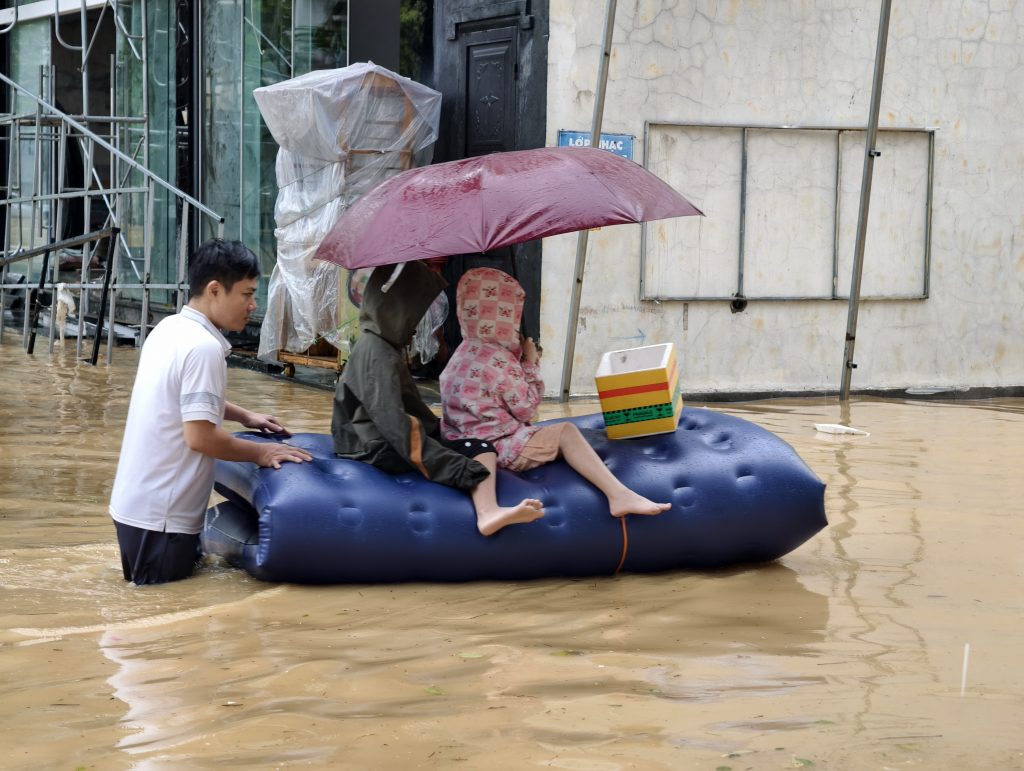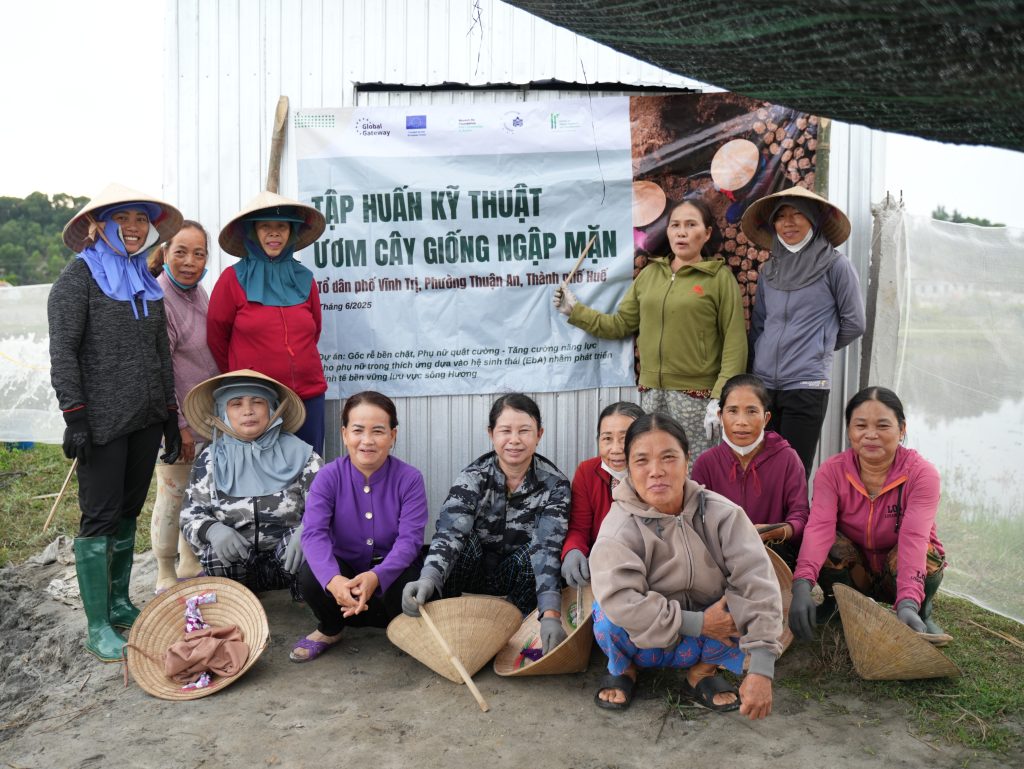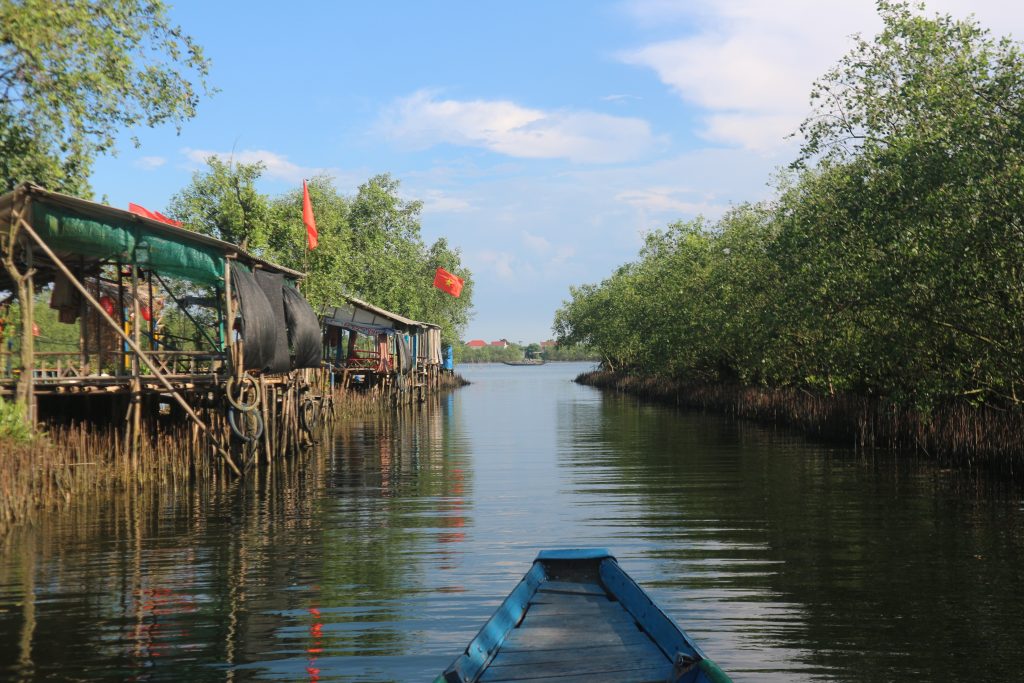
Research on the application of Nature-based solutions (NbS) and Economic-based Adaptation (EbA) in disaster risk management in Thua Thien Hue is conducted by HUAF team from May – July, 2025. This is one of activities of the four-year project named “Strong Roots, Resilient Women – Strengthening Women capacity through Ecosystem-Based Adaptation (EbA) for Sustainable Economic Development in the Huong River Basin” funded by EU and implemented by CSRD from 2024-2028.
The Objectives of this research are to: i) provide preliminary information on disaster risks, community participation in disaster response, disaster risk management plans, and economic vulnerability of communities due to unstable work and fully dependence on natural resources; ii) identify the positive roles of NbS and EbA in sustainable economic development, including circular and green economic models; and iii) explore the experiences and solutions that communities have adopted in NbS and EbA application for disaster risk management and local livelihoods, and to propose sustainable livelihood development solutions that can be easily practice.
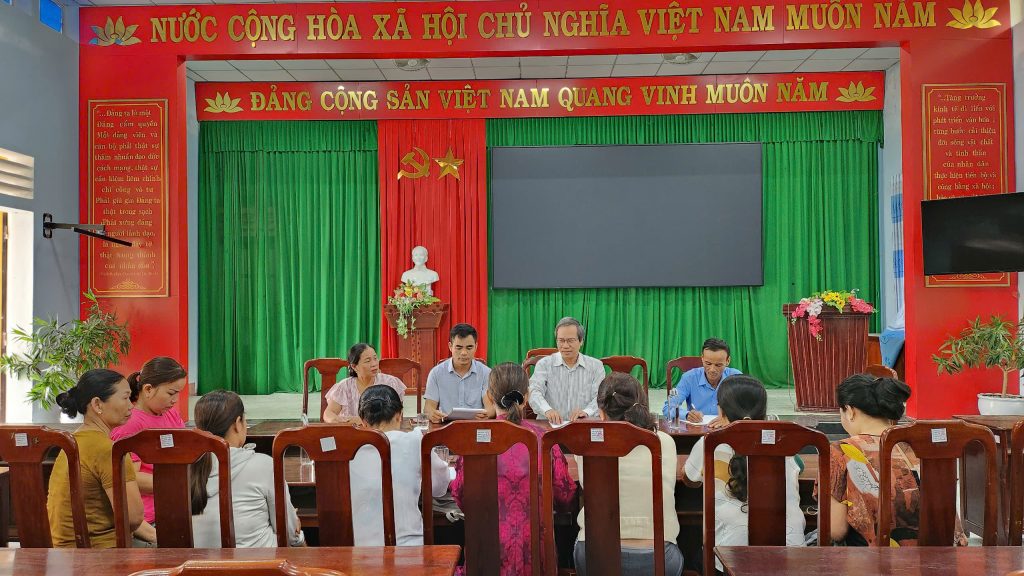
The research approaches consisting of PAR, systems thinking, gender analysis, and exploratory perspective were applied and several information collective tools were used to achieve the study’s objectives. A total of 360 participants from province, 6 districts, and 20 surveyed communes participated in discussion, information sharing and assessment processes. Especially, strong female participation (60% in the total) enabled the team to learn from women’ experiences in disaster risk management and sustainable livelihood development in different surveyed communes.
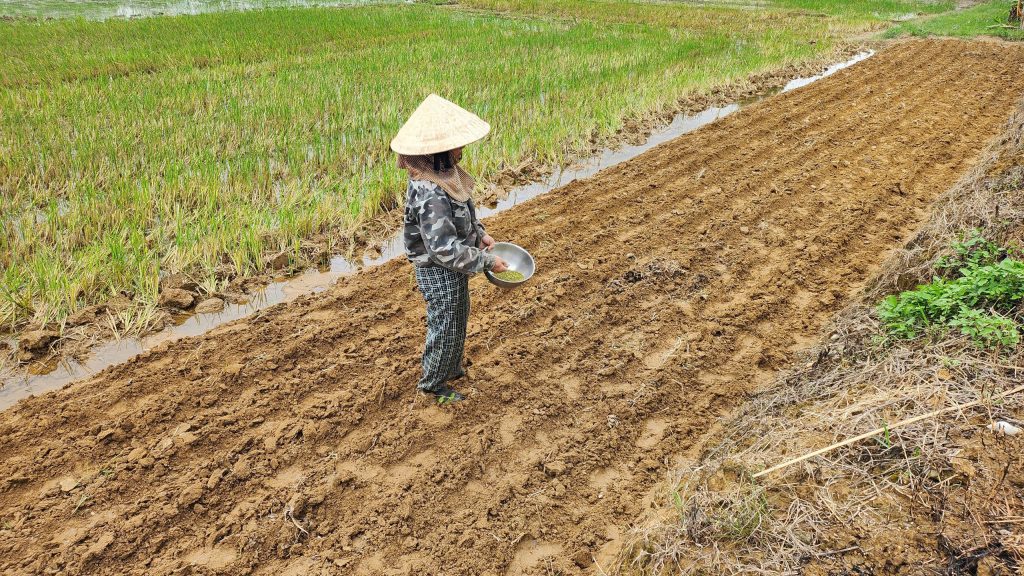
The research findings are as follows: i) There are 6 types of natural disasters – storm, flood, drought, saline intrusion, thunderstorm and landslide – affecting all surveyed communes of which the lagoon communes are the most vulnerable due to facing a variety of natural disasters with a relatively high frequency of occurrence; ii) Ward/commune authorities play the most important role in coping with natural disaster risks occurred at their community. In addition, women who are vulnerable also play an important role in disaster preventing, coping and recovery. However, the budget for this activity is still very low, not meeting the actual needs; iii) There are significant differences in gender roles in each group of livelihood activities depending on the ecological conditions and socioeconomic characteristics of each region. The livelihood activities in the lagoon and coastal regions tend to be more diverse and flexible than those in the Bo river watershed region; iv) Storm and flood are the two disaster types that cause the most significant damage to livelihoods. Lagoon and coastal regions are particularly sensitive to storm and flood due to direct exposure to extreme hydro-meteorological events meanwhile the Bo river watershed region is most affected by flooding; v) Aquaculture, rice cultivation, vegetable and crop farming, livestock raising are the most vulnerable livelihood activities to storm and flood; vi) NbS and EbA have been identified by local authorities as essential components of sustainable economic development, green economy, and circular economy strategies; vii) Awareness of new concepts such as NbS, EbA, green economy, and circular economy remains limited and women’ participation in planning processes is significantly lower compared to their involvement in disaster response activities; viii) Local people have experience in developing and applying some models of organic agriculture, climate change adapting agriculture and circular economy as well.
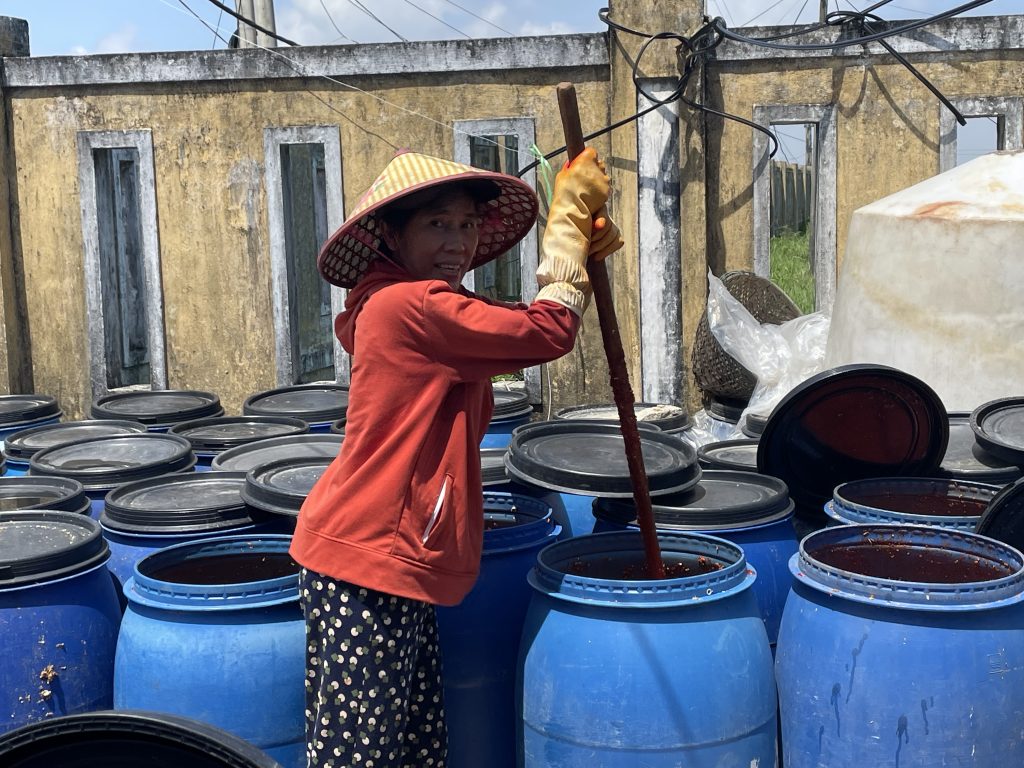
The proposed solutions from a technical perspective are recommended to the province and ward/commune leaders for inclusion in the annual local plans for disaster risk adaptation and sustainable livelihood development. There are also following suggestions to the Project: i) Restore and replant Apple mangrove (Sonneratia caseolaris (L.) Engl.) in existing and potential mangrove areas; ii) Provide consultation and organize competitions on NbS and EbA models among community groups and individuals so as to select the models that can be applied successfully and effectively; iii) Conduct communication contests on disaster risk management and sustainable livelihood development based on NbS and EbA, green economy, and circular economy as well; iv) Enhance capacity building, particularly for women, on disaster risk management and sustainable livelihood development including in training on disaster risk management skills, training on potential NbS, EbA in aquaculture, animal husbandry, and crops. Moreover, organize study visits to successful NbS and EbA models in other areas; and v) Provide consultation and develop market linkages to provide community more opportunities for promoting and marketing local products.